


What's the difference between relative and absolute poverty?
- By NA
- 12 Jul, 2016
The number of people living in 'relative' poverty is increasing. Here's how that's defined and what it means for those people.
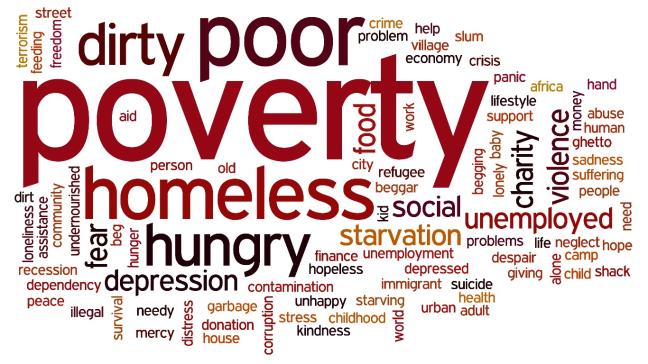
New figures published by the Department for Work and Pensions show the number of people estimated to be living in relative poverty during 2014/15 increased by 500,000 on the previous year to 10 million.
But what exactly is poverty and how do we define it? The poorest Brit still receives some state support and has access to the NHS, so there’s a vast gulf between their lot and the poorest inhabitants of a developing country.
Of course, poverty is bad and has an array of negative consequences whether you’re living in a council flat in Scunthorpe or a refugee camp in Turkey. But given that one form of poverty is so much more extreme than the other, we decided to take a look at how poverty is measured across the UK and the world.
Is it always relative, or is there some absolute line?
It’s all relative
Here in the UK we look at relative poverty. No one is living on ‘less than a dollar a day’, which is usually used as a measure of ‘absolute poverty’ – a figure used globally to define when poverty is so extreme that it’s impossible to survive on it.
The UK is the world’s sixth largest economy (or maybe fifth. The Brexit vote means things are moving fast!) and yet, according to Oxfam, one in five of the population live below our official poverty line.
It seems incredible that a fifth of UK citizens live in poverty according to our official cut-off – so what is it?
The British government, along with much of Europe, use 60% of median household income as the poverty threshold. Median means the exact middle point where there are equal numbers of households above and below, and 60% of that is considered to be where poverty starts here in the UK.
We used to use 50% of the mean income, which is the average income. However, giving more money to the poorest would raise the mean income (which is the total of all the incomes divided by the number of individuals for anyone thinking it’s a long time since their maths SATs) whereas doing so would not raise the median.
So, by using median income as a fixed point you don’t get the issue where people getting richer drags more people into relative poverty.
According to the Child Poverty Action Group there were 3.9 million children living in poverty in this country in 2014/15. To put that in a more comprehensive way: that’s nine children in every 30-child classroom.
Two-thirds of those children live in a household where at least one adult works, so employment is not an indicator that these people aren’t among the nation’s poorest.
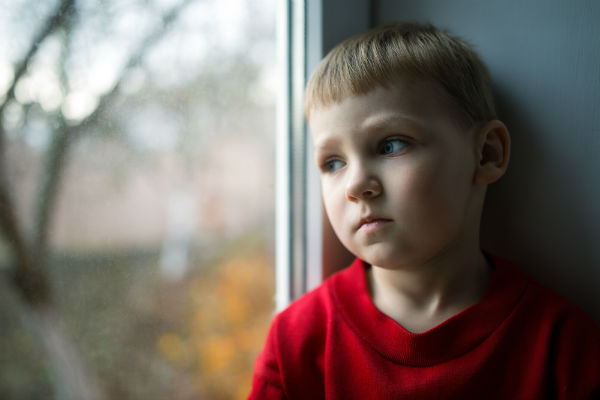
If you think that sounds like a fairly arbitrary way to measure poverty then you’re right. Households living on 61% of the median household income aren’t exactly living the life of Riley while those who drop beneath the threshold suddenly can’t afford necessities.
Redefining poverty
As unreasoned as our poverty threshold may seem, the Government recently tried to move it. They asserted that the way in which we measure official poverty makes it impossible to ever end it – as incomes improve, MPs argued, the threshold would rise.
Frank Field, a Labour MP who was appointed by the coalition government to lead an independent review into poverty, wrote in an article for the Telegraph:
“Any candidate sitting GCSE maths should be able to explain that raising everybody above a set percentage of the median income is rather like asking a cat to chase its own tail. As families are raised above the target level of income, the median point itself rises.
"Not surprisingly, therefore, no country in the free world has managed to achieve this objective.”
Unfortunately, as a number of charities quickly pointed out, that’s not how median income works. It’s the exact mid-point, meaning that if every single person in poverty were raised above the 60% of median income threshold it would still not move the median.
The only way the median would rise would be if more incomes were raised above it.
Unsurprisingly, the Government’s plan to redefine poverty was defeated in the House of Lords.
Quality of life
We might have an official measure of poverty, but that does not mean that anyone living on slightly more a week will feel perfectly comfortable. Life close to the poverty line will not be much more comfortable than life below the poverty line.
In fact, the Joseph Rowntree Foundation looks at minimum income standards as a measure; the amount that people need to earn or receive in order to “live to an adequate level”. In 2015 that figure was £17,100 a year before tax for a single person, while couples with two children needed to earn at least £20,000 a year each.
The foundation doesn’t just look at how much people need in order to survive, but how much they need to join in with society. In 2013 it published analysis that showed just under a third of British people are excluded from mainstream society because they simply can’t afford to engage with it, that’s far more than the fifth living in relative poverty.
Cultural activities like visiting the cinema or going on holiday were beyond the reach of around 30% of families and individuals and this stopped them from being able to engage with society and forced them to choose between the basic necessities of life because they couldn’t afford everything they need.

Being too broke to go to the cinema may not sound like dreadful poverty, but the study suggested that it risks alienating people from their peers.
“Participating is about belonging,” claimed the report, Poverty, Participation and Choice.
“Many of society’s expectations require individuals and families to spend money. Like it or not, Britain is a consumer society in which people are assessed according to the income that they have, how they spend it and what they do with their time.”
Difficult definitions
Ultimately poverty is hard to define on a national or a global scale, but it’s all too real for the households that are struggling to get by. A family could have a higher than average income but still live an impoverished lifestyle because of debts or the number of family members to be provided for.
And we’ve seen that a household could be above the 60% threshold and yet a long way off being able to afford cinema trips or a holiday.
It’s common to hear people sneer at the poorest for having mobile phones or smoking cigarettes, but most of us would find it hard to do without anything more than the basics we need to survive.
Source: BT.com
Recent News
Related Stories
06 Oct, 2021
Kolkata
Mission Sanjeevani Breathes Life Into A Stifled Health System
Since May 2021, we have handed over medical supplies, diagnostic equipment, hospital beds and protective gear to 103 PHCs, 96 CHCs and 103 District Hospitals across 16 states – Maharashtra, Bihar, Chhattisgarh, Odisha, Uttar Pradesh, New Delhi, Tamil Nadu, Puducherry, Assam, West Bengal, Telangana, Andhra Pradesh, Karnataka, Jharkhand, Rajasthan and Gujarat.
Read More
05 Oct, 2021
Raebareli, Uttar Pradesh
Suman Devi: Inspiring Mohalla Classes in Raebareli
Suman Devi, the head teacher of the primary school at Kallu ka Purva, an urban hamlet in the Raebareli town area, regularly visited families of her students during COVID-19. She engaged youth volunteers to run mohalla classes so that enrolled children did not become out-of-school children. And would return to school eventually.
Read More
01 Oct, 2021
Nalanda, Bihar
Well-Armed Health Workers in Bihar's Nalanda
Mission Sanjeevani plans to train and provide safety kits to 60000 ASHAs across 10 states. Ruby Devi is among the 25000 ASHAs we have reached till now. She found the training very informative but she is the most thrilled with her thermal gun and oximeter.
Read More
23 Sep, 2021
Raebareli, Uttar Pradesh
Mohalla Classes to Tide through the Pandemic
During pandemic when all schools were shut down, Oxfam India supported around 1700 children with mohalla classes across Raebareli and Banda. Around 120 volunteers were trained with the help of gram panchayat and school teachers. 17-year-old Kavita Jaiswal is one of them.
Read More
