


2022 CRII: INDIA MOVES UP SIX PLACES IN INEQUALITY INDEX BUT CONTINUES TO BE AMONG LOWEST PERFORMERS IN HEALTH SPENDING.
- By Abhirr VP
- 11 Oct, 2022
In terms of spending on health, education and social security, India is performing the worst as compared to its neighbouring countries[i].
October 11, 2022; New Delhi: India has moved up six places to rank 123 out of 161 countries for reducing inequality in the latest Commitment to Reducing Inequality Index (CRII).
The 2022 CRII is the first detailed worldwide analysis published looking at governments’ policies and actions of 161 countries to fight inequality during the first two years of the COVID-19 pandemic. Norway leads the CRII followed by Germany and Australia. While India has moved up the rankings, India features among the lowest performers on health spending again; it has dropped a further two places in the rankings, to 157th, the 5th lowest in the world.
The Index which is prepared by Oxfam International and Development Finance International (DFI) measures governments policies and actions in three areas proven to have a major impact on reducing inequality. The three areas are public services (health, education, and social protection), taxation and workers’ rights.
“The 2022 CRII report shows India making marginal gains when it comes to reducing inequality during the COVID-19 pandemic. India which was ranked 129 in the previous index in 2020 has moved up six places mainly due to indicators quantifying impact of public spending and impact of tax on reducing inequality. These are the positives from the report but what’s worrying is that India is still lagging when it comes to spending on health, education and social security” said Amitabh Behar, CEO of Oxfam India.
“India unfortunately features among the lowest performers on health spending again. India has dropped a further two places in the rankings, to 157th (or 5th lowest in the world). India even made small cuts on health spending between 2019 and 2021 – at a time of unprecedented health need and crisis. Given the wide criticism of the government’s response to COVID-19 and the great need for healthcare improvements, it is disappointing to see that things are still moving in the wrong direction”, said Amitabh Behar.
India’s health spending is 3.64% of total spending. This is the lowest out of all BRICS and neighbouring countries. While China and Russia are spending 10%, Brazil is at 7.7% and South Africa is highest at 12.9%[ii]. Even in neighbouring countries, Pakistan is at 4.3%, Bangladesh at 5.19%, Sri Lanka at 5.88% and Nepal at 7.8%.
The 2022 CRII shows that despite the worst health crisis in a century, half of low and lower middle-income countries in the Index, cut the share of health spending of their budgets. Half of all countries (77) cut the share going to social protection, while 70% cut the share going to education[iii].
While poverty levels increased to record levels and workers struggle with decades-high prices, two thirds of countries failed to raise their minimum wages in line with economic growth during the pandemic. Twelve countries in the Index have no national minimum wage – with India joining this list since 2020. India has been reclassified as not having a minimum wage, given that a large number of workers, like domestic workers in many states, are not covered by minimum wages.”
Despite huge pressure on government finances, 143 of 161 countries froze the tax rates on their richest citizens, and 11 countries even lowered them.
“Our index shows that most governments have completely failed to take the steps needed to counter the inequality explosion created by COVID-19. They ripped away public services when people needed them most, and let billionaires and big corporations off the hook as they reap profits at record number” said Gabriela Bucher, Oxfam International’s Executive Director.
KEY FINDINGS OF CRII 2022:-
1: India’s overall rank has improved by 6 points from 129 in CRI 3 to 123.
2: It has moved up 12 places to rank 129 for reducing inequality through progressive spending and three places to rank 16 for progressive taxation. The rank for labour rights has remained the same.
3: Under Impact of public spending on reducing inequality indicator, India has moved up 27 places.
4: Under Impact of tax on reducing inequality indicator, India has moved up 33 places.
5: Under ranking for minimum wage, India has fallen 73 places due to India being reclassified as not having a national minimum wage.
COMPARISON WITH OTHER COUNTRIES:-
1: India is way behind the other BRICS countries. Of the five, South Africa is ahead at rank 27, followed by Russia with rank 36, China at 50, Brazil at 77 and India trailing far behind at 123.
2: Even in pillars like progressive spending, India is on rank 157, fifth from the bottom, while Brazil, China, Russia and South Africa are at ranks 89, 60, 62 and 43, respectively.
3: Among India’s neighbouring countries, only Pakistan has a slightly worse rank at 126 (3 ranks behind India), Bangladesh is at 107 (16 ranks ahead), Sri Lanka at 111 (12 ranks ahead) and Nepal at 112 (11 ranks ahead).
4: In terms of spending on health, education and social security, India is performing the worst as compared to its neighbouring countries. Sri Lanka is a close second at rank 156, Nepal at 154, Pakistan at 149 and Bangladesh at 136.
Download the latest CRII report here:- https://www.oxfamindia.org/knowledgehub/workingpaper/commitment-reducing-inequality-index-crii-2022
[i] As per CRII 2022; India from national budget documents; Bangladesh, Nepal and Sri Lanka from GSW; Pakistan from UIS, GSW and ILO
[ii] As per CRII 2022; Brazil data taken from CEPAL, China and Russia from WHO, South Africa from GSW
[iii] Compiled from various sources for each country by CRII
For any query, please reach out to - abhirr@oxfamindia.org
About Oxfam India
Oxfam India is a movement of people working to end discrimination and create a free and just society. We work to ensure that Adivasis, Dalits, Muslims, and women and girls have safe violence-free lives with freedom to speak their minds, equal opportunities to realize their rights, and a discrimination-free future.
Recent News
Related Stories
12 Oct, 2020
Uttar Pradesh
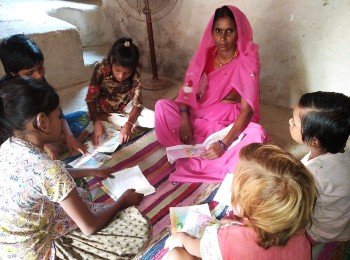
Breaking Barriers of Disability to Educate Children
Devkali is an active member of School Management Committee (SMC) of Primary School Terahimafi in Banda district. She holds regular monthly meetings with SMC members and teachers and has kept the discussions around improving school education and infrastructure alive. Devkali is breaking caste and disability barriers to ensure children in her village receive quality education.
Read More
01 Oct, 2020
Chennai
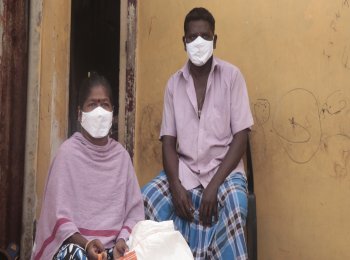
A Generous Unforgettable Help
With no money or source of income, they relied on help from the church and the dry ration from the PDS that helped them manage somehow. Though the families in a slum are closely knit, and were helping each other out as much as possible, the condition of each family was similar and there wasn’t much that anyone could do. In Chennai, Oxfam India and BLESS reached out to 1550 households with food and hygiene kit. Arokiarani was one of them.
Read More
29 Sep, 2020
Chennai
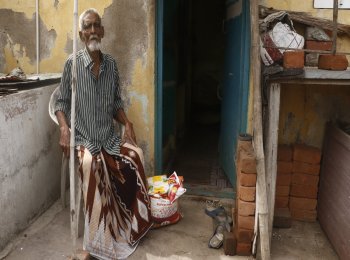
In the Nick of Time
In June, just about when Zakruddin had run out of all options, a few neighbours told him about the volunteers from BLESS and Oxfam India. As part of the response, Oxfam India has been reaching out to some of the most marginalised communities across 16 states. And with ample support from its donors it has been distributing cooked food, dry ration, hygiene and safety kits, and distributing cash to the poorest households.
Read More
25 Sep, 2020
Bihar
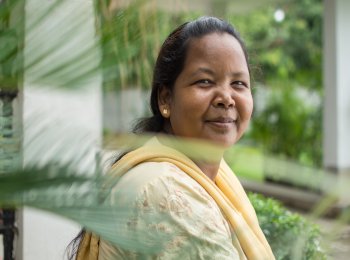
Fighting to End Gender Discrimination: Johani Kisku
She founded MADAD in 2009 in Patna. She was now free to do her thing her way — whether it was resolving issues or voicing her opinion or mobilising, educating, supporting, training and employing the girls. She helped the girls find self-respect and their own identity. Courtesy the Malala Fund, she took her projects to Buxar, and spread awareness among the deprived Dalit and tribal girls and their parents.
Read More
