


Atmanirbhar Bharat Package Subsidises Private Sector and Plans for the Rich
- By Oxfam India
- 20 May, 2020
The health and education component of the Rs 20 lakh crore COVID-19 relief package (Atmanirbhar Bharat package) ring hollow in the absence of concrete financial commitments to back the rhetoric.
20 May 2020
The announcements made by the Union Finance Minister Nirmala Sitharaman to invest more in public health, strengthen the public health system, improve epidemic preparedness, address mental health of school students and prioritize foundational learning are welcome. However, these intentions and promises do not mean much without specific budgetary commitments.
The only concrete dedicated commitment for public health remains the Rs 15,000 crores emergency response package announced by Prime Minister Narendra Modi in the beginning of the lockdown for supply of PPEs, improving testing and insurance for health professionals; no financial commitment has been declared for education. India has been in lockdown since March 25.
“The Prime Minister’s relief package should have focused on the recovery and strengthening of the health system post the pandemic, in addition to relief for poor and informal sector workers. Surprisingly, there were no concrete measures to strengthen the public health system in the package. Even 1% of the 20 lakh crore would have helped setup around 48,000 Primary Health Centres. Deeply disappointing to see that health is still not a priority for the government even during the worst pandemic of our generation. This shows we are ignoring the big lesson from the pandemic that a robust public health system is non-negotiable for the future of our country,” said Amitabh Behar, CEO of Oxfam India.
The Ministry of Finance is yet to provide clarity on how and to what extent it plans to increase public expenditure on health and invest in grassroots health institutions. While it is critical to address the specific needs arising from the epidemic, in the long run, it is more important to strengthen the public health system overall to face COVID-19 and other public health challenges. Indian government currently spends only Rs 3 on health per person per day. This is among the lowest in the world; India’s public health expenditure as a share of its GDP is significantly lower than Brazil and China.
Subsidising the Private Without Strengthening the Public Sector
The only relevant new financial commitment for health and education as part of the Atmanirbhar Bharat Abhiyaan is the creation of a pool of Rs 8100 crores for Viability Gap Funding (VGF) to boost private sector participation in social sector infrastructure creation like schools and hospitals. This decision will benefit public-private partnership. But without concrete steps to strengthen the regulatory mechanism for private hospitals and schools, this decision will neither benefit the poor or the middle class. Oxfam India is deeply concerned that this provides a massive subsidy to the private sector at a time when the private sector has failed to respond to the pandemic.
Consider this, hospitalisation fees to treat COVID-19 for a single day in a private hospital is equivalent to five months’ salary of an average Indian. On the other hand, only 300 people have so far been able to get treatment under Ayushman Bharat since COVID-19 was declared a pandemic. There have been a number of reports of private hospitals either overcharging or denying healthcare in these difficult times. There has also been a 50% decrease in the procedures availed under the Ayushman Bharat scheme due to the COVID-19 pandemic which is worrying. Public hospitals have been on the frontline providing treatment to COVID-19 positive patients, while the established government mechanism for private healthcare for the poor is neither providing ongoing treatments nor COVID-19 care.
It is thus, difficult to justify increased subsidies for the private sector under these circumstances when no funds have been set aside for strengthening the public health system as a whole. Oxfam India strongly believes that the Indian government should ensure that corporate hospital chains or private schools are not subsidised, prevent profiteering and make certain that private providers adhere to the law of the land in terms of provisions of the Clinical Establishment Act, Patients’ Rights, RTE Act, Fees Regulatory Framework among others.
Digital Divide – 85% children excluded due to digital education
The education component of the package announced by the Finance Minister focusses principally on digital and distance modes of education as an alternative method of teaching during the lockdown. This has been announced keeping the middle class and above in mind; 85% of India’s children lack access to the digital infrastructure necessary to access it. But the fact of the matter is that even the middle-class homes have struggled with digital infrastructure.
Non-distance and non-digital modes of providing education have neither been explored nor acknowledged. Traditional models of teaching including ensuring availability of textbooks and other materials for children, and face to face lesson transaction while meeting physical distancing norms did not appear to be on the government’s to-do list.
Moreover, there are challenges with reliance on digital modes of teaching which can be used for dissemination of content but not promote teacher-student or student-student interaction. No efforts to build teachers’ capacities to teach in the digital mode have been announced.
This emphasis on digital discriminates against the poor in India. Oxfam India strongly believes that this digital divide will further exacerbate inequality.
“India's poor are left to be completely ‘Aatmanirbhar’ in education. While the government focuses on e-learning, the reality is that only 2.7 percent of the poorest households have access to a computer. The government needs to look at approaches that are more inclusive such as provision of print material and teaching offline in small groups, which is being explored in Nagaland” - Anjela Taneja, Lead Specialist- Inequality and Essential Services, Oxfam India
Conclusion
The package disappoints since it subsidises the private sector and doubles down on strategies that have not worked for India’s poor. The government should put India’s poor at the centre of its fiscal stimulus and focusing on strengthening public health and education services is the first step in that direction. At a time when 12 crore Indians have recently lost their jobs, it is also crucial to regulate private providers of health and education to prevent cases of profiteering and overcharging. This pandemic is a defining moment in India’s history. Whether it makes it self-reliant or dependent is upon the government.
—-
For more information, please contact:
Himanshi Matta (media): himanshi@oxfamindia.org
Anjela Taneja (Inequality Campaign Lead): anjela@oxfamindia.org
Recent News
Sixth Oxygen Plant Inaugurated in Chhattisgarh
14 Nov, 2021
Informal Sector Workers Rapid Survey
03 Nov, 2021
Fifth Oxygen Plant Inaugurated in Bhor, Pune
01 Nov, 2021
Related Stories
10 Apr, 2023
Sitamarhi, Bihar
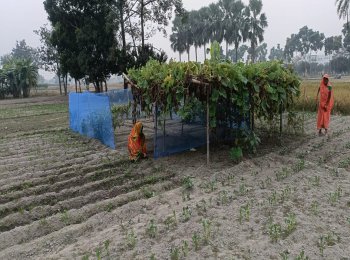
Building A Robust Kitchen Garden
When Oxfam India started Project Utthan in Khairvi village, the Village Development Committees were formed and they helped in identifying people, from the most marginalised communities, who could be a part of the project. Ragani Devi was supported to develop the kitchen garden and make it more robust and productive.
Read More
07 Apr, 2023
Kalahandi, Odisha
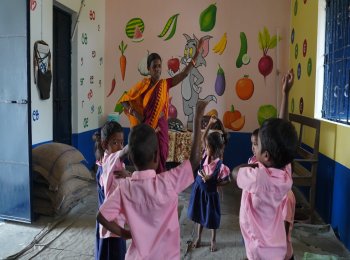
Upparnuagaon Anganwadi Centre Gets A Makeover
The 'before and after' photos of the Anganqadi Centre in Upparnuagaon village is stark. Through Project Utthan four Anganwadi Centres have been renovated and refurbished in villages in M Rampur block in Kalahandi. And it is doing wonders for the children and the community.
Read More
04 Apr, 2023
Nalanda, Bihar
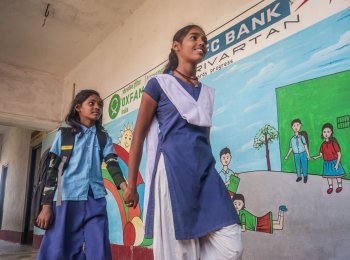
Making Schools Better
Meena Manch member Prem Kumari of Amar village ensured that Anjali Kumari returned to school. The latter's parents told her that Anjali was staying back at home so that she could take care of her younger siblings. Though Anjali returned, in many cases parents do not want to listen to young girls. This is where the Sugam Karta or the lady teacher identified to support the young girls is most helpful.
Read More
30 Mar, 2023
S 24 Parganas, West Bengal
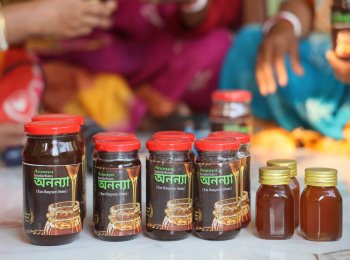
Brand Ananya Launched
This Women’s Day was particularly exciting for the 150 women in Bipradaspur Gram Panchayat in Sunderbans. The GP in Gosaba in South 24 Parganas (West Bengal) witnessed the launch of “Ananya”. Ananya is the brand of organic raw honey and aromatic Gobindbhog rice promoted by the women of 11 Self Help Groups in the Panchayat. In fact on the day of the launch itself they managed to earn Rs 2000 through the sale of their produce!
Read More
