


HEALTH AND EDUCATION CONTINUES TO FIND NO PRIORITY IN THE UNION BUDGET
- By Akshay Atmaram Tarfe
- 01 Feb, 2023
February 1, 2023; New Delhi: The Union Budget has missed yet another opportunity in addressing the growing inequality in the country. The allocation for key social sector spendings like health and education continued to remain abysmally low in the Union Budget. Oxfam India disappointedly notes that despite high inequality, the Union Budget has announced tax cuts for the people from the highest income slab.
This year, the Ministry of Health and Family Welfare and AYUSH has been allotted INR 92,802.5 crores, which is an increase of 13.2 per cent from the last year’s Budget. Yet, the Union Government spending on health is now only a meagre 2.06 per cent of the total Union Budget which is less than half percent (0.35 per cent) of India’s GDP. The Union Government meanwhile has allocated an amount of INR 1,12,899 crore to the Ministry of Education. Though it is an increase of 13 per cent from FY 2022-23, this constitutes only 2.5 per cent of the total Union Budget. This makes the Union Government expenditure on education only 0.41 per cent of India’s GDP.
The Mahatma Gandhi National Rural Employment Guarantee Program (MGNREGA), a scheme that was crucial in providing assistance to the poor has also seen a cut in Budget allocation. During COVID-19 pandemic, MGNREGA protected most vulnerable households through employment opportunities. The Union Government’s MGNREGA budget reduction ignores socio-economic realities of the country where people desperately need employment guarantee. MGNREGA received only INR 60,000 crores for FY 2023-24, a 30 percent decrease from FY 2022-23. During the last year, the scheme received an allocation of INR 89,400 Cr (RE).
“While the poor and marginalised in the country continue to suffer a health, education, cost of living and climate crisis, the Finance Minister's Union Budget unfortunately offers no relief. Instead, the Budget provides further tax cuts and incentives to the rich in the country. Inadequate allocation in the health and education sector runs the risk of depriving the socio-economically marginalised populations from good-quality education and healthcare. After the COVID-19 pandemic, the Union Finance Minister had a historic opportunity to reset our economy to address the obscene inequality being witnessed in the country. Sadly, this has not happened. We urge the Union Government to change the track and immediately enhance the budgetary allocation of the health sector to 2.5 per cent of GDP, as envisaged in the National Health Policy, to reinvigorate the public healthcare system. The Union Government must also enhance the budgetary allocation for education to the global benchmark of 6 per cent of GDP, as also committed in the National Education Policy,” said Amitabh Behar, CEO, Oxfam India.
*Note to the editor: All figures are Revised Estimates (RE) from the Union Budget 2022-23.
For any query, please reach out to - abhirr@oxfamindia.org
About Oxfam India
Oxfam India is a movement of people working to end discrimination and create a free and just society. We work to ensure that Adivasis, Dalits, Muslims, and women and girls have safe violence-free lives with freedom to speak their minds, equal opportunities to realize their rights, and a discrimination-free future.
📢Oxfam India is now on Telegram. Click here to join our Telegram channel and stay tuned to the latest updates and insights on social and development issues.
Recent News
Equitable Vaccine Policy: Civil Society writes to PM
18 May, 2021
Related Stories
02 Mar, 2023
S 24 Parganas, West Bengal
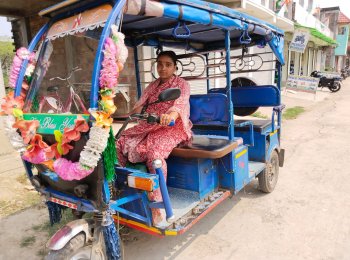
Sonali Neye: Public Heath Champion
Sonali is our Public Health Champion—spreading public health awareness to all the women and girls who ride with her in her Toto. She plans to keep sanitary napkins in the Toto so that it is easily accessible to menstruating riders. What's her story?
Read More
27 Feb, 2023
Kalahandi, Odisha
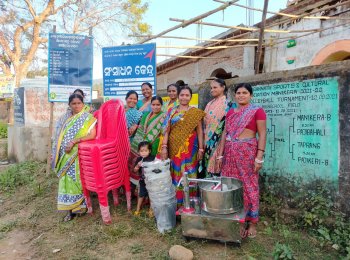
From Resource Centre To A Business Hub
What started as a Resource Centre for information dissemination in Manikera village in Kalahandi has now become a business hub. 30 women in 3 Resource Centres were provided with tent house kits and in the last month and a half they made a profit of Rs 13,500. One such resource centre at Manikera is being run by the 12-member Maa Tarini Women’s group.
Read More
27 Feb, 2023
Koraput, Odisha
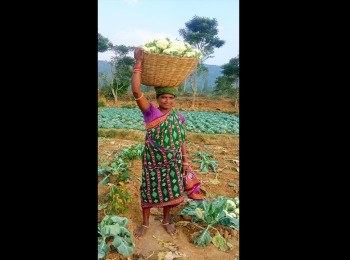
Adi Burudi: A President, Farmer and An Inspiration
Once a mono cropper and earning about Rs 20000 annually until a year ago, Adi Burudi now has expanded her scope and avenues of farming and making profits of nearly Rs 35000. The turning point for the 32-year-old was the Oxfam India-SDMCTrust project. The women farmer led livelihoods project was launched in 40 villages of Semiliguda and Pottangi blocks in 2020. Sanaphatu is also one of the project village.
Read More
22 Feb, 2023
Sitamarhi, Bihar
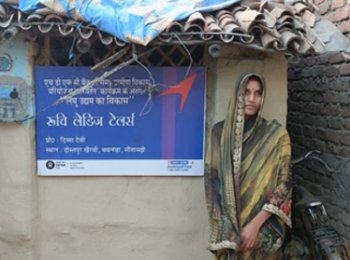
Cash Nudge for Divya Devi
Since her family was going through financial constraints, the cash support was much needed. Divya Devi opened "Ruvi Ladies Tailor" shop. Through Project Utthan, she received Rs 10,800 which is 90% of the financial support she needed; she put in Rs 2000 of her own money to purchase a second-hand sewing machine, cloth, and other supplies for her shop. She also saved up some money to buy the next round of materials.
Read More
