


New Education Policy 2020
- By Oxfam India
- 01 Aug, 2020
National Education Policy 2020 aims to fulfil the five-decade old commitment to spend 6% of GDP on education without a concrete financial roadmap to fund Right To Education
Estimates show the country needs additional Rs. 9.82 lakh crore annually for free elementary school education.
The Government of India (GOI) on July 29 released a historic National Education Policy (NEP) which aims to create transformational reforms in school education and reiterates GOIs five decades old commitment to spend 6% of the Gross Domestic Product (GDP) on education. The policy presents a more humanistic vision of education with special emphasis on supporting education in the mother tongue. It also proposes to address long pending issues related to the career path for teachers.
However, some provisions in the NEP also indicate India’s subtle shift towards market-based approach towards education, moving away from education as a government responsibility through concrete provisions such as Right to Education Act (RTE) 2009, landmark legislation which guaranteed free and compulsory education for children between the age of 6 to 14 years in India under Article 21A of the Indian Constitution. While the NEP has committed towards universalisation of education, it fails to mention governments’ specific commitments towards ramping up school infrastructure and resource allocation in line with RTE norms.
“We strongly welcome the focus back on questions of equity and quality in the NEP, particularly the recognition that without 6% GDP spend the education goals will remain hollow. However, the laudable objectives mentioned in the policy – increased GDP spend and focus on the mother tongue – must be implemented well and government needs to ensure they get translated into real action and not get shredded by partisan politics, vested interests, and bureaucratic apathy,” Oxfam India CEO Amitabh Behar said.
“What is now needed is an honest and sincere dialogue with all stakeholders and an action plan to convert this policy into a reality,” Behar added.
Absence of concrete financial commitments for education
The NEP’s commitment to spend 6% of GDP on education was first made by the Kothari Commission over 50 years ago and yet currently stands at 3.1% of the GDP. As a result of underspending only 13% of elementary schools comply with the national infrastructural norms laid under the RTE Act. If the policy is to be implemented, significant additional central investments are particularly needed for India’s educationally lagging and poor states with a high share of marginalized communities. This has been estimated by the National Institute of Public Finance and Policy (NIPFP) to be in the tune of 10% Gross State Domestic Product for Bihar, 3.2% in Jharkhand and 3% in Odisha, 1.9% in Chhattisgarh and 1.8% percent in UP.
Potential commercialisation of school education
The encouragement to “philanthropic schools” and PPPs in the NEP has given green signal for opening of more private schools and increasing privatization. The provision risks further commercialising school education in India without strong evidence linking private schools with better education outcomes or a more equitable school system.
“India cannot hope to have an educational system that is second to none by 2040 without ensuring equitable funding for all of India’s public schools and ending regional disparities. Depending on private providers of school education will not help in addressing these disparities. India needs to commit to ensuring each government school is resourced to the level of the Kendriya Vidyalaya norms,” Anjela Taneja, Inequality Campaign lead at Oxfam India said.
According to the Annual Status of Education Report (ASER) 2018, 35% of rural private school students in grade 5 cannot read a basic grade 2 level paragraph. ASER 2019 data also show that private schools continue to be more inaccessible to girls than boys with 47.9% of boys attending private schools against 39% girls. Considering the exclusion, profiteering and discrimination by private schools that continues even during the pandemic, a legally enforceable comprehensive regulatory and enforcement framework for private school is missing in NEP.
For more information, please contact:
- Savvy Soumya Misra (Media): savvy@oxfamindia.org
- Anjela Taneja (Inequality Campaign Lead): anjela@oxfamindia.org
Note to the Editors: Oxfam India’s spokespersons are available for interviews. To arrange interviews or further queries please contact Savvy Soumya Misra: savvy@oxfamindia.org
Recent News
Related Stories
20 Jan, 2022
Kerala
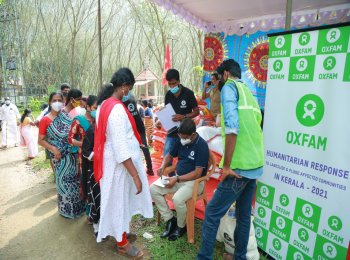
Supporting the Flood-Affected in Kerala
Jobin, Pankajakshi, Remya and Parvathy, though from different districts in Kerala suffered a similar fate in the October 2021 floods and landslides. They were all left without a source of income or food to feed their families. Oxfam India delivered dry ration and safety kits to 2771 families in Idukki, Alappuzha, Pathanamthitta and Kottayam.
Read More
16 Jan, 2022
Uttar Pradesh
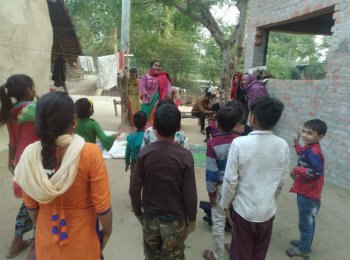
Mohalla Classes 2.0
Due to prolonged school closure, children had lost interest in attending classes and there was a wide learning gap during this period. To bridge the learning gap among children, Oxfam India has once again started 15 Mohalla classes covering four districts of Uttar Pradesh. In these classes 321 children including 155 girls and 166 boys are getting education with the help of volunteers and Oxfam India team. Out of these children, 77 children are out of school.
Read More
13 Jan, 2022
Dhubri, Assam
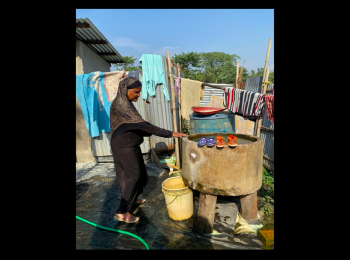
Handcrafting a Water Filter
Rowsonara, troubled with the heavy iron content in the water, first made a multi-layer mud filter with coal, sand and rocks through which contaminated water would trickle down to a chamber that would hold clean water. She bettered it by making a cement filter. Quite a few people in the area also replicated the filter in their respective households and now have access to water that is better fit for consumption.
Read More
07 Jan, 2022
Karnataka
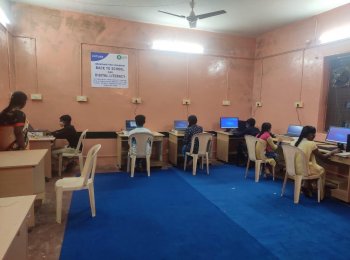
Back to School and Digital Literacy
Schools which were on our Bangalore trail now have refurbished computer rooms as part of the Oxfam India-Virtusa 'Back to School and Digital Literacy' programme. 537 children belonging to some of the most marginalised communities will now have access to computers. And of course, a whole lot of stationery and sports item as well!
Read More
