


Who Tells Our Stories Matters: Representation of Marginalised Caste Groups in Indian Newsrooms
- By Oxfam India
- 02 Aug, 2019
2nd August 2019
Dalits and Adivasis missing from mainstream Indian news media; upper castes dominate leadership positions
Indian media is dominated by upper castes and media organisations have failed to diversify their newsroom and news coverage, reveals a new report released by Oxfam India and Newslaundry.
The report ‘Who Tells Our Stories Matters: Representation of marginalised caste groups in Indian Newsrooms’ studies the representation of people from different caste groups in the Indian media. (report attached)
“The report starkly reaffirms that marginalised groups are absent in news media, particularly in leadership positions which determine who gets the space. Even stories written on those affected by discrimination are by those who are privileged and upper caste. Honest collective efforts have not been made to include more voices and create equal representation in newsrooms. It is disheartening to see that media, which is one of most recognised institution of democracy, fails Dalits, Adivasis and other marginalised groups.”
“This report is important for those working in and working with the media as it presents an opportunity before them to deliberate a way forward that upholds the constitutional guarantees of equality and fraternity,” said Amitabh Behar, Chief Executive Officer, Oxfam India.
The report uses multiple methods — surveys, byline count and triangulation with publicly available government sources to identify castes of journalists, anchors, writers, editors and panellists. Six English and seven Hindi newspapers, flagship debate shows on 14 television channels, 11 digital news outlets, and 12 magazines were examined to collect caste details for the period of October 2018 to Match 2019. Over 65,000 articles and news debates were analysed across the publications to provide a quantitative picture of which groups get to speak on various subjects and to what extent.
‘Who Tells Our Stories Matters: Representation of marginalised caste groups in Indian Newsrooms’ was launched as journalists from across the country gathered at the Media Rumble in New Delhi. Some of the key findings of the report are:
- Of the 121 newsroom leadership positions – editor-in-chief, managing editor, executive editor, bureau chief, input/output editor – across the newspapers, TV news channels, news websites, and magazines under study, 106 are occupied by upper castes, five by other backward classes and six by people from minority communities. The case of four individuals could not be identified.
- Three out of every four anchors (among a total of 40 anchors in Hindi channels and 47 in English channels) of debates are upper caste. Not one is Dalit, Adivasi, or OBC
- For over 70% of their primetime debate shows, news channels draw the majority of the panellists from the upper castes
- No more than 5% of all articles in English newspapers are written by Dalits and Adivasis. Hindi newspapers fare slightly better at around 10%
- Around 72% of bylined articles on news websites are written by people from the upper castes
- Only 10 of the 972 articles featuring on the cover pages of the 12 magazines under study are about issues related to caste.
Media’s problem with representations is affecting the quality of news coverage in the country. The report shows the dangerous trend of only one English newspaper accounting for over half the share of coverage on caste issues.
“The most overused cliché “make the invisible, visible” perhaps explains the situation of our media institution today. There are discussions and commentary on how representative we are but in absence of any real data to understand the severity of the problem, the conversation around this is not as productive as it can be. “
“This report is important and after seeing the results we are totally convinced of its need. There is no democracy without diversity. For democracy to thrive, journalism must thrive and for journalism to thrive, diversity must be robust. We have to do this consciously because the numbers on caste diversity in newsrooms are dismal. This is a dreadful commentary on the quality of our democracy. This report is a first step in holding a mirror to ourselves and once we have a dashboard with the numbers on it, we can try and improve them every year. We will aim to do this report annually and hopefully see the numbers improve. We hope other industries do so too, across newsrooms and board rooms,” said Abhinandan Sekri, CEO Newslaundry.
The report suggests urgent need to take proactive steps, including affirmative action, to diversify newsrooms in line with the country’s social and demographic character. To this end, systems to encourage inclusion must be put in place, and concerted efforts made to train and hire journalists from across the social spectrum.
Note to the Editors
The Methodology section of the report explains in the details the multiple methods adopted to procure and analyse the data. Request you to please see Page 3 and the Appendix Sections Page 38, 39, 40 and 41.
Recent News
Related Stories
22 Dec, 2021
Nalanda, Bihar
Awl's Well That Ends Well
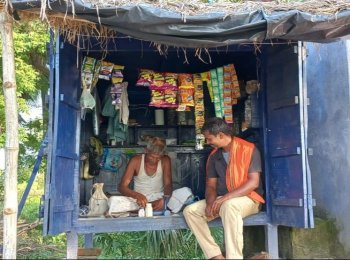
Ram Bihari, a cobbler by profession, received help through the Oxfam India-HDFC initiative. Not only did he set up a wooden stall he diversified to sell grocery as well. Not only has his monthly income increased by Rs 2000, it is also a huge step towards ending discrimination and breaking the mould where the profession of a person is pre-decided and imposed upon them because of the caste they are born into.
Read More
16 Dec, 2021
Chennai
Covid Relief Continues in Chennai
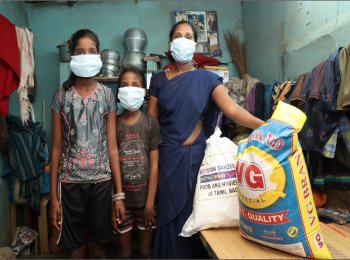
Through Mission Sanjeevani, with the support from Technicolor, we delivered food and safety kits to families in Chennai. We distributed relief material to 575 families adversely affected by the pandemic. These are the stories of four families who received relief kits, comprising food and hygiene items, in Chennai’s Vyasarpadi neighbourhood.
Read More
16 Dec, 2021
Uttarakhand & Kerala
Our Response in Kerala and Uttarakhand
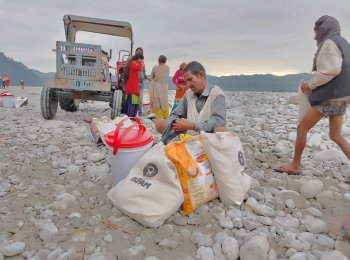
We have reached out to over 6000 families stranded in the October floods and landslides in Kerala and Uttarakhand with dry ration and hygiene kit. In Kerala we have carried out WASH activities to repair 144 wells so as to ensure clean drinking water.
Read More
08 Dec, 2021
Beed, Maharashtra
One Sweet Step At A Time
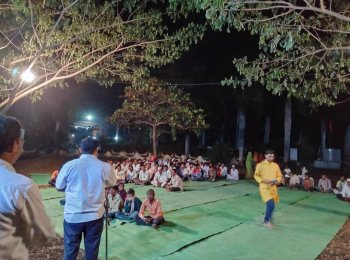
Loknete Sundarrao Solanke Co-Operative Sugar Factory in Maharashtra's Beed district has taken the responsibility of registration of sugarcane cutters and promised education material for the children of the cutters. The registration of cane cutters is a big step towards providing them social security. This was also a big step for the children, who migrate with their parents for nearly six months (from Diwali to March) and have no recreational or learning avenues.
Read More
