


World Health Day 2021: Oxfam India Calls for the Implementation of Patients’ Rights Charter to Make Private Healthcare More Accountable
- By Oxfam India
- 07 Apr, 2021
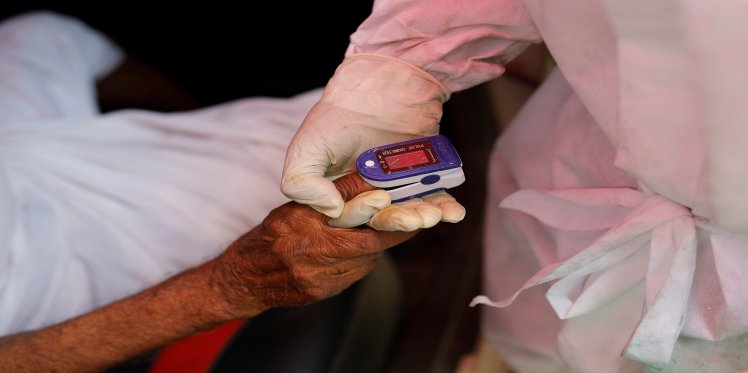
17-point Patients’ Rights Charter’s implementation along with treatment price capping by all state and union territories' governments is crucial to improve transparency in the functioning of private hospitals
New Delhi; April 7, 2021: The governments, civil society, communities, and medical fraternity across the globe will commemorate April 7 as World Health Day and pledge for building a fairer and healthier world for everyone. On this occasion, it is important to highlight that the vision of building a fairer and healthier India is impossible without recognising the rights of patients and making healthcare providers accountable. This World Health Day, Oxfam India is calling for the implementation of Patients’ Rights Charter (PRC) and clear mechanisms for grievance redressal for healthier India by state and union territories (UTs) governments.
The COVID-19 pandemic has prompted union and state governments to invest in public health infrastructure and resources. However, 69.9% of ailments were treated by the private healthcare sector (NSSO 75th Round 2017-18) making it a bigger healthcare provider than the government itself. Calling the Indian healthcare system ‘one of the most highly privatised and commercialised in the world’, the Oxfam India analysis of Indian private healthcare regulations recommended accountability mechanisms such as PRC for the private healthcare providers.
High reliance on an unregulated private sector pushes millions of Indians into poverty and deprives our rural and urban poor, Dalits, Adivasis, women, specific religious and ethnic minority groups of their right to health. The implementation of PRC which recognises around 17 patients’ rights including transparency in treatment rates can be a step in the right direction to make private healthcare more accountable to marginalised communities.
The need for Patients’ Rights Charter
In August 2018, the Ministry of Health and Family Welfare (MoHFW) released India’s first Patients’ Rights Charter (PRC) with the recommendations from National Human Rights Commission (NHRC). With health being a state subject, the MoHFW urged state governments to adopt the PRC through a letter in June 2019. Even after two years, PRC is yet to be adopted by state and union territories in India. The COVID-19 pandemic has brought the issue of patients’ rights to the forefront with private hospitals openly violating patients’ rights and making healthcare even more inaccessible to the people especially the marginalised communities. Recognising the growing patients’ rights violations during the pandemic, National Human Rights Commission (NHRC) recommended state governments implement PRC through an advisory issued in September 2020.
Anjela Taneja, Oxfam India’s Lead for Health and Inequality said, “85.9% of India’s rural population have no health insurance. In a state like Delhi, even capped COVID rates could financially cripple 80% of Delhi’s citizens. At a time when India is seeing a new COVID surge, it is time to not just cap COVID treatment rates but also notify the Patients’ Rights Charter and establish a speedy and effective grievance redressal mechanism in case of violations by hospitals. In the end, India needs a strong universal, free public health system.”
The lack of transparency in private hospital bills often contributes to overcharging and patients are left helpless in absence of a grievance redressal mechanism. In 2011-12, 55 million people were pushed into poverty through out-of-pocket (OOP) expenditure on health. An analysis of bills from four reputed private hospitals in the Delhi and NCR region by the National Pharmaceutical Pricing Authority (NPPA), Government of India revealed that the establishments make profit margins from 100 % to 1,737% on drugs, consumables, and diagnostics, and these three components account for about 46% of a patient’s bill.
During the pandemic state governments actively regulated prices of COVID-19 treatments through Government Orders (GOs) and circulars. This also prompted several state governments and local bodies to run helpdesks for patients suffering from overcharging and denial of healthcare. It is time that state governments use learnings from the COVID-19 pandemic and incorporate permanent grievance redressal with PRC to improve healthcare access especially for the marginalised communities who are disproportionately affected by these problems.
You can access the draft of the Patients’ Rights Charter here.
About Oxfam
Oxfam India is a movement of people working to create a just and equal India. We work to ensure that Adivasis, Dalits, Muslims, and women and girls have safe-violence-free lives with freedom to speak their minds, equal opportunities to realize their rights, and a discrimination-free future. We research to find lasting solutions to end rising inequalities and exclusion of marginalized communities from getting decent jobs, quality free education, and healthcare. We campaign with the public to demand policy changes from governments for creating a just and inclusive country as envisioned in the Indian Constitution. We mobilize support to save, protect and rebuild lives of the poorest of the poor affected by crisis and humanitarian disasters.
📢Oxfam India is now on Telegram. Click here to join our Telegram channel and stay tuned to the latest updates and insights on social and development issues.
Recent News
Related Stories
04 Dec, 2018
Odisha
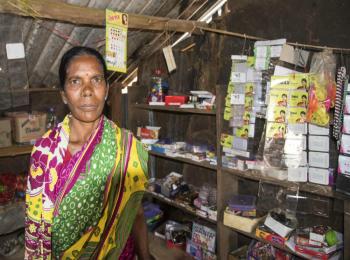
This woman is breaking through Kandhamal’s skewed power dynamics
Social marginalization in India is mostly attributed to one’s social identity including caste, religion and ethnicity. However the framework of marginalisation shows varied dimensions in pockets where poverty majorly rules choice of religion or faith. One such place is Khandamal district in Odisha.
Read More
03 Dec, 2018
India
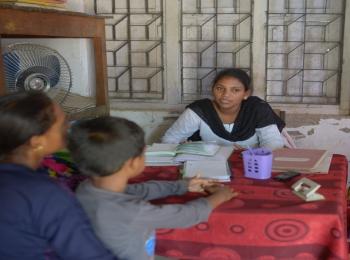
Paving the way for change
Sonali married at 17 and unknowingly entered into a relationship filled with violence and abuse. Through Oxfam's Creating Spaces project Sonali was able to leave her abusive husband, and gain custody of her two young boys.
Read More
01 Dec, 2018
Uttar Pradesh
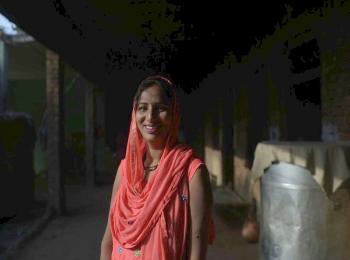
Being a trailblazer
Vishaka Kashyap, 28, was 22 years old when she was married and went to go live in her husband’s village in Uttar Pradesh. Vishaka is a strong advocate for women and girl’s education; she offers to tutor girls for free so they can get keep up with their schooling without an added cost to the family.
Read More
01 Dec, 2018
Odisha
Being the voice of her community
Shakuntala Harpal, 45, is a Dalit leader in Harichandrapur Village, India. Shakuntala has worked for many years to help the women and girls in her village exercise their basic rights. Shaktunala helps women who experience violence seek justice and support services.
Read More
