


India Inequality Report 2021: India’s Unequal Healthcare Story
- By Oxfam India
- 20 Jul, 2021
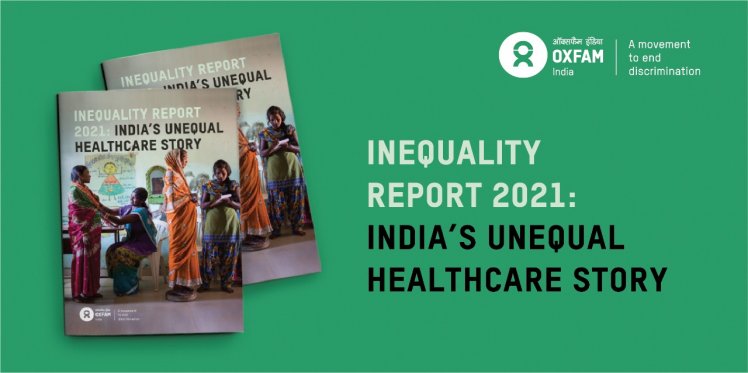
Reduced Health Budget Allocations in 2021 Disproportionately Affecting Marginalised Groups
July 20, 2021| New Delhi: Growing socio-economic inequalities in India are disproportionately affecting health outcomes of marginalised groups due to the absence of Universal Health Coverage (UHC), reveals Oxfam India’s Inequality Report 2021: India’s Unequal Healthcare Story.
Data shows that 65.7 percent of the households belonging to the General Category have access to improved, non-shared sanitation facilities while only 25.9 percent Scheduled Tribes (ST) households have improved, non-shared sanitation facilities. 12.6 percent more children are stunted in Scheduled Castes (SC) households than those in households belonging to the general category. And the chances of a child dying before his fifth birthday is three times higher for the bottom 20 percent of the population as compared to the top 20 percent.
The new report by Oxfam India provides a comprehensive analysis of the health outcomes across different socioeconomic groups to gauge the level of health inequality that persists in the country. The report shows the general category performs better than SCs and STs; Hindus perform better than Muslims; the rich perform better than the poor; men are better off than women; and the urban population is better off than the rural population on various health indicators. The COVID-19 pandemic has further exacerbated these inequalities.
Hindu households are performing better than Muslim households, especially on indicators of access to healthcare. Institutional births and access to food supplements under ICDS are 10 percent less for Muslim households as compared to Hindu households; 8 percent less children are immunised in Muslim households.
Health inequalities and COVID-19 Second wave’s disproportionate effect on rural India
India’s particularly disastrous COVID-19 second wave exposed the weakness of the public healthcare system. The National Health Profile (NHP) in 2017 data showed that there is only one government allopathic doctor for every 10,189 people and one state run hospital for every 90,343 people.
The number of hospital beds per thousand population in India (0.5) is lower than some of the lesser developed countries such as Bangladesh (0.87), Kenya (1.4), and Chile (2.1).
The Oxfam India report shows that constant underfunding of public healthcare system in last decade has also worsened health infrastructure.
The number of hospital beds per 10,000 population between 2010 and 2020 reduced from 9 to 5. Currently, India ranks 155 out of 167 countries on bed availability and has 5 beds and 8.6 doctors per 10,000 of its population. Rural India houses 70 percent of the population, while it has 40 percent of the beds in the country, Oxfam India report shows.
The lack of health infrastructure in rural India resulted in devastating effect of second COVID-19 wave. By May 2021, one in every two cases was in the rural areas, while states like Uttar Pradesh and Rajasthan had 75 percent of their cases in rural areas.
Amitabh Behar, CEO, Oxfam India said, “Persistent underfunding of public health system especially primary health care and inadequate health infrastructure in India remain to be addressed by the government even after devastating second wave. Otherwise, health emergencies will only aggravate existing inequalities and work as a detriment for the poor and the marginalised. Declaring health as a constitutional right can help to bridge these gaps.”
Inequalities in health outcomes due to systemic problems
In the last few decades, though India’s overall health indicators have improved the progress has been uneven across socioeconomic groups. The development of health system has resulted in increased life expectancy, but outcomes change as per gender, caste, and income. The Oxfam India report shows the rich, on an average, live seven and a half years more than the poor. Similarly, on an average, a woman from the general category lives 15 years longer than a Dalit woman.
The analysis further shows overall improvement in infant mortality rate (IMR) is not equal across social groups. Dalits, Adivasis and OBCs have higher IMR as compared to general category. IMR for Adivasis is 44.4 which is 40 percent more than the general category and 10 percent more than the national average.
To address these fundamental inequalities in health system, the report recommends implementation of Universal Health Coverage (UHC) supported by strong public health sector. Marginalised communities also face disproportionate burden of Out-of-Pocket expenditure (OOPE) on health. According to government estimate, six crore people are pushed into poverty every year due to healthcare expenditure.
Failure of the government to address systemic issues in health system
Anjela Taneja, Inequality, Health & Education lead Oxfam India said, “The current health status of the country is a testament to the unfulfilled dream of ‘Health for All’. The right to the highest attainable health is far from being realised. Even after one year into the pandemic and facing two COVID-19 waves, Government of India has repeated its failure to allocate 2.5% of Gross Domestic Product (GDP) for health.”
In Oxfam’s Commitment to Reducing Inequality Report 2020, India ranks 154th in health spending, fifth from the bottom. In the 2021-22 union budget, a year following a pandemic, the Ministry of Health and Family Welfare (MoHFW) was allocated a total of INR 76,901 crore, a decline of 9.8 percent from INR 85,250 crore from the revised estimates of 2020-21.
Higher public health allocations have shown positive effect on health outcomes in pandemic. State governments with higher expenditure on health had lower confirmed cases of COVID-19. States such as Odisha and Goa, with higher expenditure on health also had higher recovery rate from COVID-19, analysis by Oxfam India showed.
“The report also revealed that public funds for health have also been invested specifically on secondary and tertiary care rather than in the provisioning of primary healthcare; private healthcare providers are burgeoning; the result has been a widening of health inequalities along caste, class, gender and geography,” Behar added.
Failure of insurance model in providing healthcare to the marginalised
The state and union governments have introduced health insurance schemes for all to reduce OOPE on health and move towards universal health coverage. Yet poverty owing to high OOPE increased from 3.25 crore in 1999–2000 to 5.5 crore in 2017 and less than one-third of households in the country were covered by government insurance scheme by 2015-16.
The report shows that the limited scope and coverage of the insurance schemes cannot address the all-encompassing requirements of UHC. Recently obtained data via Right to Information (RTI) showed that only 19 people got COVID-19 treatment under Union Government’s Ayushman Bharat in Bihar, one of the worst affected states in second wave.
Oxfam India’s seven states survey on health inequalities during COVID-19
A primary survey of 768 respondents by Oxfam India, with COVID-19 or having recovered from COVID-19, showed the following:
- Percentage of respondents in higher income groups who had to arrange for transport themselves was half of those in low-income groups.
- Percentage of respondents in low-income brackets facing discrimination in the community due to being COVID positive was five times than those in high income brackets.
- Over 50 percent of SCs and STs faced difficulties in accessing non-Covid medical facilities compared to 18.2 percent in the general category.
- Percentage of SCs using an unsafe source of water was three times that of general category for open wells, and four times for open springs or streams.
- Among female respondents, 33.9 percent experienced anxiety, irritation and anger, and sleep deprivation during the lockdown as compared to 18.2 percent males.
India is in the middle of an unprecedented healthcare crisis. The report establishes a case for an urgent need to address underlying causes of health inequality and invest in a strong primary healthcare system to make quality public healthcare accessible and affordable to all sections of the society.
For more information:
Savvy Soumya Misra: savvy@oxfamindia.org
Tejas Patel: tejas@oxfamindia.org
Note for Editors:
- Infant Mortality Rate (IMR): Deaths per 1000 live births of children under one year of age.
- Out-of-Pocket Expenditure (OOPE): Share of out-of-pocket payments to total health expenditure.
- Universal Health Coverage (UHC): It includes the full spectrum of essential, quality health services, from health promotion to prevention, treatment, rehabilitation, and palliative care across the life course, without suffering financial hardship.
About Oxfam India
Oxfam India is a movement of people working to end discrimination and create a free and just society. We work to ensure that Adivasis, Dalits, Muslims, and women and girls have safe violence-free lives with freedom to speak their mind, equal opportunities to realize their rights, and a discrimination-free future.
Recent News
Related Stories
18 Mar, 2021
Mumbai
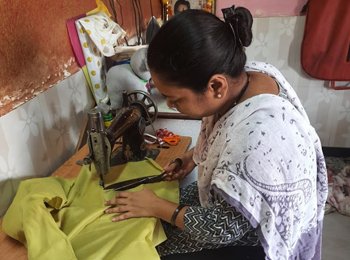
Sewing A Better Future
In Mumbai, livelihood trainings are being carried out among 12 SHGs in Govandi and Mankhurd. Despite the economy opening up, many have still not been able to either get their jobs back or restore the wages that they were getting pre-pandemic. The situation is worse for those who lost their sole breadwinners to the virus. Here's a story of 3 women who have been able to make ends meet, thanks to the livelihood training they received. These trainings are being done in collaboration with Siemens.
Read More
10 Mar, 2021
Mayurbhanj, Odisha
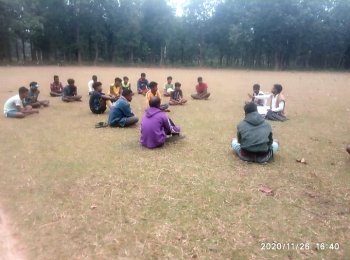
Youth Volunteer As Teachers During Pandemic
Last year, the sudden lockdown led to the closure of more than a million schools throughout the country leading to disruption in education of school students. While children everywhere faced the impact of this discontinuity of their education, the situation proved to be more severe for children from remote rural areas who had no access to internet, smartphone or electricity to be able to access virtual classes. This problem was further exacerbated for tribal students who further faced the challenge with regard to the language of instruction used for classes that were being broadcast. This situation prompted the Dharamveer Youth Group from Prasan Chandrapur Village of Noto Panchayat to come forward and take the responsibility of supporting children from the community so that they could continue their education.
Read More
14 Feb, 2021
Chhattisgarh & Jharkhand
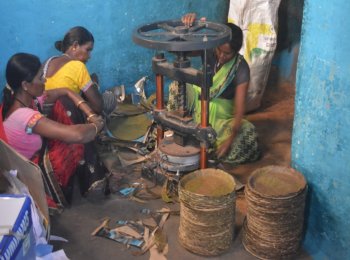
Solar Boost For Rural Livelihood
Based on the success of the solar-powered Sal leaf plate making unit in Chhattisgarh, two more machines were installed in Jharkhand and Chhattisgarh. This value addition will improve the quality of the product and fetch better price than the traditional hand-made plates. These have been set up in Bade Gobra village in Mainpur block in Chhattisgarh's Gariaband district and in Mohanpur Village in Sundarpahari Block in Jharkhand's Godda district.
Read More
11 Feb, 2021
Kushinagar, Uttar Pradesh
Making Toilets Sustainable
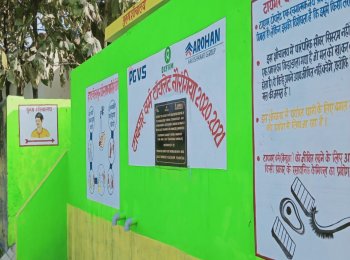
On February 2, 2021, Oxfam India handed over a Tiger Worm Toilet (TWT) complex to the Naurangiya panchayat in Uttar Pradesh’s Kushinagar district. Present at the handing over were community members and representatives from the Arohan Foundation and our on-ground partner PGVS. The toilet complex has five toilets and is built in the complex of the panchayat bhawan.
Read More
