


Patients Rights and Inequality in Vaccine Survey
- By Abhirr VP
- 23 Nov, 2021
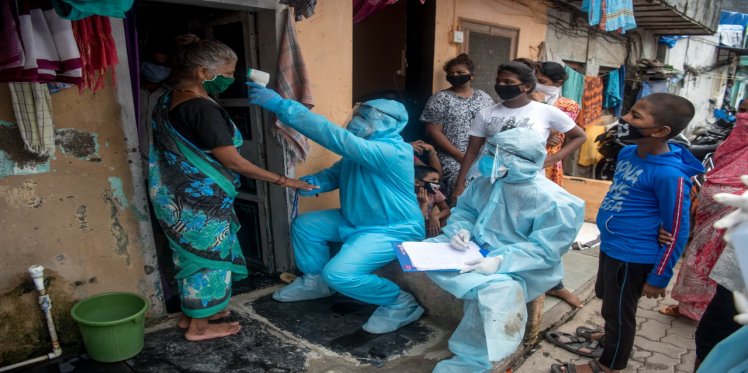
1 in 4 Indians faced discrimination while accessing health services due to their caste and religion: Oxfam India
Lapses in implementation of Patients’ Rights and Inequality in Vaccine Policy continue to exploit poor and Middle Class.
Tuesday, November 23, 2021: A third of Muslim respondents, over 20% Dalit and Adivasi respondents, and 30% of overall respondents reported being discriminated against on the grounds of religion, caste or because of illness or health conditions in a hospital or by a healthcare professional, said Oxfam India.
These findings are from Oxfam India’s latest survey ‘Securing Rights of Patients in India’. The two-part survey provides a perspective on the plight of patients and citizens in the healthcare system. The surveys cover the rights of patients against some of the provisions of the Ministry of Health and Family Welfare’s Patients’ Rights Charter (PRC) and India’s vaccination drive. Both surveys covered respondents from 28 States and 5 Union territories. The PRC survey was done between February and April 2021 and received 3890 responses while the vaccine survey was done between August and September 2021 covering 10,955 respondents.
The Plight of India’s Patients
58% respondents to Oxfam India survey said that they were not provided with an estimated cost of treatment/procedure before the start of treatment/procedure when they or their close relatives were hospitalised in the past 10 years. 31% respondents reported being denied case papers, patient records, investigation reports for treatment/procedure by the hospital even after requesting for the same.
19% of respondents whose close relatives were hospitalized said they were denied release of dead body by the hospital. 35% of women told Oxfam India that they underwent physical examination by male attendant without a female present in the room.
“The Oxfam India surveys show that the basic rights of patients’ in India are being routinely denied in healthcare facilities, for the poor and middle class alike. Skewed power dynamics with respect to class, caste, religion, and gender between the healthcare providers and patients deepen existing structural inequalities in the healthcare system. The Patients’ Rights Charter drafted by Ministry of Health and Family Welfare needs to be immediately adopted by state governments along with robust grievance redressal mechanisms to provide citizens with recourse when things go wrong,” said Oxfam India CEO Amitabh Behar.
The Story of India’s Vaccination drive
"Only 27 percent of our population have been fully vaccinated so far. In Oxfam India survey, 55% of individuals believe that imposing a one-time tax of 1% on the net-worth of India’s richest 1000 families will be helpful to fund entire vaccination programme at the cost of INR 500 billion ($6.8 billion). The poor and middle-class India mustn’t be burdened with higher taxes for the vaccination drive through fuel and food taxes,” said Amitabh Behar CEO of Oxfam India.
Despite the Prime Minister’s stated intention to not discriminate during the vaccination drive, 74% respondents earning less than INR 10,000 per month and over 60% respondents from marginalized and minority communities felt that the government has failed in informing them about how and when to get vaccinated.
“It is crucial to note that India does not maintain records of people vaccinated disaggregated by income or social group which would have been critical to tailor strategies to the specific population needs. Almost one out of ten people said they had to lose a day’s wages to get themselves vaccinated. Any commitment to equity on the vaccination drive would accordingly need to be rooted in an effort to track the relative progress of vaccination for India’s rich and poor in the various social groups", said Anjela Taneja, Lead, Advocacy at Oxfam India.
8 in 10 respondents also did not feel confident that India would be able to vaccinate all adults by December 2021. Challenges were also reported with the vaccination drive with 9% of respondents saying that they had to lose a day’s wage to get themselves vaccinated; 43% reported that the vaccination centres had run out of vaccines when they visited the centre.
"It is time to start capturing the differential experiences and challenges of patients who are rich and poor, of men and women, of the privileged and marginalized communities in the health system. This will make the healthcare system responsive to their individual needs and contexts. In the long run, India needs to strengthen the Public Health system and establish greater regulation over the Private Health Sector. The government of India must make health a fundamental right to ensure that every citizen has recourse when their rights are violated,” said Amitabh Behar.
Note to Editors: Key Findings
Patient’s Rights Survey:
- In the survey, 30% people said that they have been discriminated against due to an illness or health condition that they have, 12% people felt that they have been discriminated on grounds of religion, 13% people felt that they have been discriminated against due to their caste. One-third of Muslim people said that they have been discriminated on the grounds of their religion in a hospital or by a healthcare professional.
- Right to Information: 74% people said that the doctor simply wrote the prescription or treatment or asked them to get tests/investigations done without explaining their disease, nature and/or cause of illness.
- Right to Informed Consent: More than half of the respondents (57%) who were themselves/their relatives had been hospitalised did not receive any information about investigations and tests being done.
- Right to Second Opinion: At least a third of respondents who had themselves/their relatives hospitalised said their doctor did not allow a second opinion.
- Right to Take Discharge of Patient or Receive Body of Deceased from the Hospital: 19% of respondents whose close relatives were hospitalized said that they were denied release of dead body by the hospital.
COVID-19 Vaccination Drive Survey:
- 83% believed that all vaccination should be done completely free of cost through the government, like previous vaccination drive.
- Only 2% are in favour of higher taxes on fuel and food to fund India's COVID-19 vaccination drive. In contrast, 55% of individuals believe that imposing a one-time tax of 1% on the net-worth of India’s richest 1000 families will be helpful.
- 95% people from all age categories felt that vaccination must be brought closer to the elderly, persons with disabilities and informal sector workers by making use of mobile vans, vaccination camps and home-based vaccination.
- 88% believed that the government must ensure that marginalized groups such as street dwellers, migrant workers, immigrants, refugees, and asylum seekers are given access to vaccination without having to furnish documentation.
- Improve information about vaccination. 74% respondents earning less than INR 10,000 per month and over 60% respondents from marginalized and minority communities felt that the government has failed in informing them about how and when to get vaccinated. Eight in 10 felt that government had been changing its COVID-19 vaccine policies too frequently.
- 89% people said that the government must do more to ramp vaccine production, especially through public sector companies.
Please download the full report here
https://www.oxfamindia.org/knowledgehub/oxfaminaction/securing-rights-patients-india
Contact Abhirr VP (Manager, Oxfam India): +91 9739981606
About Oxfam India
Oxfam India is a movement of people working to end discrimination and create a free and just society. We work to ensure that Adivasis, Dalits, Muslims, and women and girls have safe violence-free lives with freedom to speak their mind, equal opportunities to realize their rights, and a discrimination-free future.
📢Oxfam India is now on Telegram. Click here to join our Telegram channel and stay tuned to the latest updates and insights on social and development issues.
Recent News
Related Stories
03 Mar, 2022
Lohardaga, Jharkhand
A School Away From School
Not only are Mohalla Classes helping bridge the learning gap, the child-friendly and activity-based classes are proving to be the best way to ensure children do not drop out of schools and go back to formal schools once they reopen and run. The Lohardaga Mohalla Classes are helping children from the most marginalised communities catch up.
Read More
02 Mar, 2022
Pratapgarh, Uttar Pradesh
Shivani Rajak: The Volunteer and The Student
From a dalit family, and eldest of four siblings, Shivani is driven by two things—one, the strong belief that children have to study so that they have a better future and two, that she wants to be a teacher and is seeing this as her training to become one. She along with Alka, Oxfam India's community mobiliser, takes classes for 31 children—18 girls and 13 boys—in Gaukhedi village in Pratapgarh district.
Read More
28 Feb, 2022
Lakhimpur Kheri, Uttar Pradesh
Organic Farming Brings Life Back On Track
Before Oxfam India and Aim Trust started working in the Lakhimpur Kheri district, Rajeshwari and her husband would only use pesticides and chemical fertilisers in their field. They believed that the usage of chemicals on land was their only option and they were not aware of the harmful effects of dangerous chemicals on soil.
In 2018, Aim Trust organised a meeting in Jangalipurwa, in which Rajeshwari participated alongside 10 women. They learned about organic farming techniques that did not damage soil quality.
Read More
28 Feb, 2022
Koraput, Odisha
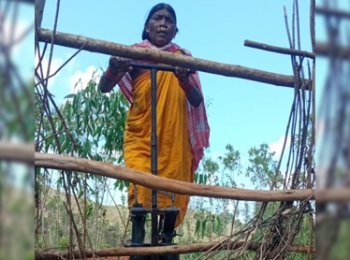
Treadle Pump: A Low Cost Game Changer
In May 2021, the group comprising 52 women farmers was formed in Lingamguda, Koraput. Sunduri Nayak was one among them. One of the first things they discussed was the farm pond, the difficulty in irrigation, and the need for proper irrigation in the area. Our team then started discussions around low cost irrigation technologies. After some deliberation, the treadle pump was decided as the idle irrigation system for the area.
Read More
