


'Systemic violence against women cannot be solved with more violence'
- By Oxfam India
- 05 Dec, 2019
Oxfam India condemns the brutal gang rapes of women in India and demands concrete, effective and long-term solutions to end the rising violence against women in the country. The NCRB Crime in India 2017 report states that more than 900 crimes against women take place every day. The shocking reality is that large number of such assaults go unreported. More than 90% of perpetrators are known to the survivor.
Oxfam India demands that notions of justice for the survivor should include enabling her to heal and move on. Death penalty is not a solution to end violence against women and girls. The deterrent in such cases lies in the certainty of punishment and not its severity. Death penalty discourages the woman from reporting the crime given the high number of perpetrators from family, neighborhood and known persons.
Despite the rhetoric of death penalty, only 32% of sexual assault cases end in conviction. Justice delayed is justice denied. Much more can and should be done both to prevent sexual assault and to enable survivors to recover from the trauma. High level of male entitlement and no fear of the law fuel the rape crisis. There is need to teach men and boys to respect women, end subordination of women and girls, end male entitlement and end the sense of shame linked to sexual assault. There is also need to bring the police to account for failing to file a prompt FIR, institute good policing practices and improve law enforcement. It is also important to recognize sexual assault of transgender persons and men which is not adequately recognized in law.
Justice also includes believing in what the survivor says, enabling psycho-social support, healthcare, compensation, healing and recovery. However, the promises of these essential services made to women and girls, after another brutal rape which happened in 2012 have not been fulfilled. Merely 17% of funds for One Stop Centres, 20% of Central Victim Compensation funds and only 43% of funds for women’s helpline have been utilised[1]! Most districts do not have any services to assist survivors. Both public and private spaces continue to be unsafe for women and girls.
In this context, we place the following demands for addressing sexual violence against women and girls.
-
Make One Stop Centres and 181 helplines accessible and functional at the district and sub-district level
-
Ensure effective utilisation, periodic monitoring and tracking of Nirbhaya Funds
-
Provide adequate budgets and make the Rape Compensation Scheme functional in all states
-
Make the police accountable for prompt filing of cases and speedy investigation
-
Set up fast track and sensitive courts for speedy trial
- Make public places, transportation and work places safe for women and girls
[1] http://www.cbgaindia.org/publication/promises-priorities-analysis-union-budget-2019-20/
For media queries, please write to us at: himanshi@oxfamindia.org
Recent News
Related Stories
18 Mar, 2021
Mumbai
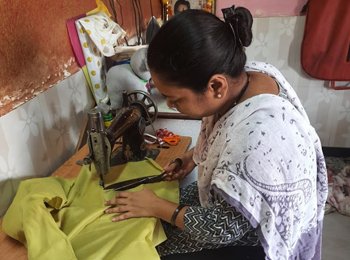
Sewing A Better Future
In Mumbai, livelihood trainings are being carried out among 12 SHGs in Govandi and Mankhurd. Despite the economy opening up, many have still not been able to either get their jobs back or restore the wages that they were getting pre-pandemic. The situation is worse for those who lost their sole breadwinners to the virus. Here's a story of 3 women who have been able to make ends meet, thanks to the livelihood training they received. These trainings are being done in collaboration with Siemens.
Read More
10 Mar, 2021
Mayurbhanj, Odisha
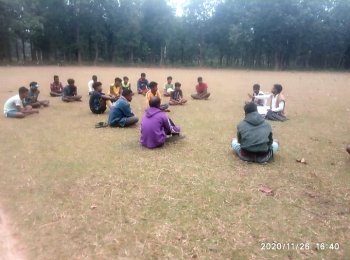
Youth Volunteer As Teachers During Pandemic
Last year, the sudden lockdown led to the closure of more than a million schools throughout the country leading to disruption in education of school students. While children everywhere faced the impact of this discontinuity of their education, the situation proved to be more severe for children from remote rural areas who had no access to internet, smartphone or electricity to be able to access virtual classes. This problem was further exacerbated for tribal students who further faced the challenge with regard to the language of instruction used for classes that were being broadcast. This situation prompted the Dharamveer Youth Group from Prasan Chandrapur Village of Noto Panchayat to come forward and take the responsibility of supporting children from the community so that they could continue their education.
Read More
14 Feb, 2021
Chhattisgarh & Jharkhand
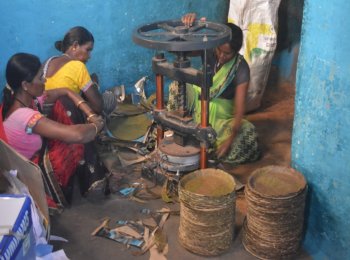
Solar Boost For Rural Livelihood
Based on the success of the solar-powered Sal leaf plate making unit in Chhattisgarh, two more machines were installed in Jharkhand and Chhattisgarh. This value addition will improve the quality of the product and fetch better price than the traditional hand-made plates. These have been set up in Bade Gobra village in Mainpur block in Chhattisgarh's Gariaband district and in Mohanpur Village in Sundarpahari Block in Jharkhand's Godda district.
Read More
11 Feb, 2021
Kushinagar, Uttar Pradesh
Making Toilets Sustainable
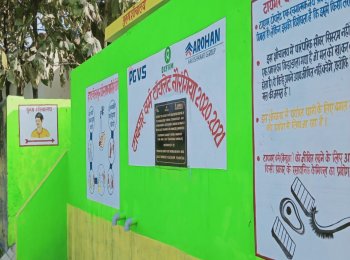
On February 2, 2021, Oxfam India handed over a Tiger Worm Toilet (TWT) complex to the Naurangiya panchayat in Uttar Pradesh’s Kushinagar district. Present at the handing over were community members and representatives from the Arohan Foundation and our on-ground partner PGVS. The toilet complex has five toilets and is built in the complex of the panchayat bhawan.
Read More
